Ribbon Blenders vs. Other Mixing Solutions: A Comprehensive Analysis
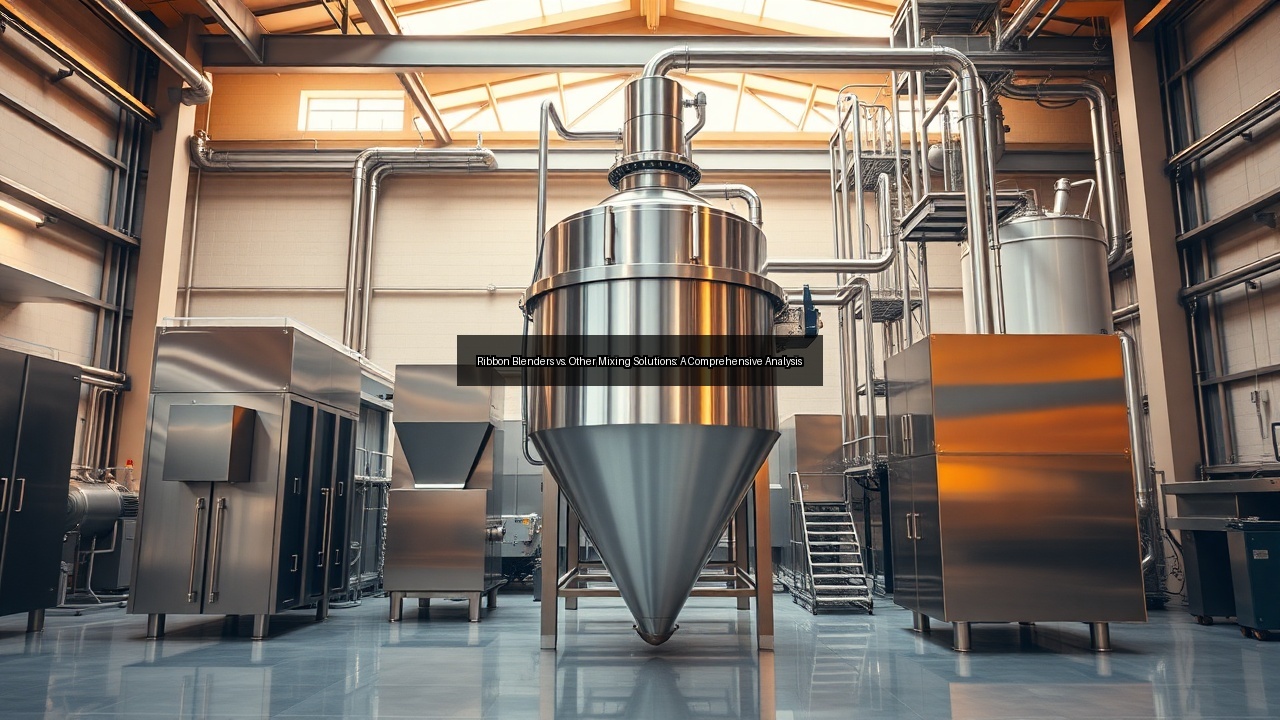
Understanding Ribbon Blenders: Design and Functionality
The Construction of Ribbon Blenders
Ribbon blenders feature a unique design that promotes efficient mixing of bulk materials. Their construction consists of a long, cylindrical trough that houses a set of ribbon screws. These screws, positioned along a central shaft, allow for both horizontal and vertical mixing actions. The outer ribbons move materials outward while the inner ribbons pull them back towards the center. This dual-action mixing creates a uniform blend of powders, granules, and other dry materials. The design also facilitates easy loading and unloading, often enhanced by integrated rotary valves that enable precise control over the material flow. Durability is a hallmark of ribbon blenders, as they withstand harsh industrial environments, making them a staple in many manufacturing processes.
How Ribbon Screws Enhance Mixing Efficiency
The ribbon screws play a pivotal role in the efficiency of ribbon blenders. Shaped like intertwined ribbons, these screws optimize the movement of materials within the trough. Their configuration ensures that materials constantly shift positions, which promotes thorough mixing. The design minimizes dead zones, areas where materials can stagnate, leading to inconsistent blends. Moreover, the screw speed can be adjusted, allowing for control over the mixing process. Higher RPMs can accelerate mixing, while lower speeds are ideal for more delicate materials that require gentle handling. This adaptability makes ribbon screw blenders advantageous for a wide range of applications, from pharmaceuticals to food processing.
Material Choices: The Role of 304 Stainless Steel
Material selection significantly impacts the performance and longevity of ribbon blenders. 304 stainless steel is a popular choice due to its corrosion resistance and durability. This high-quality stainless ribbon screw blenders steel can withstand the rigors of industrial mixing, making it suitable for various applications, including those involving corrosive substances. Additionally, 304 stainless steel is easy to clean, an essential feature in industries where hygiene is paramount, such as food and pharmaceuticals. The choice of stainless steel not only extends the lifespan of the blender but also ensures that it meets strict regulatory standards, providing peace of mind for manufacturers concerned about safety and compliance.
Comparative Analysis of Mixing Solutions
Overview of Industrial Mixers
Industrial mixers encompass a range of equipment designed for blending materials in various forms. While ribbon blenders are celebrated for their efficiency in mixing dry powders, other types of mixers, such as paddle mixers, V-blenders, and planetary mixers, serve different purposes. Paddle mixers utilize flat blades to mix materials, which can be advantageous for viscous substances. V-blenders, on the other hand, rotate around two axes, providing a gentle mixing action suitable for fragile powders. Planetary mixers offer a versatile approach, enabling the mixing of both solid and liquid components. Understanding these various mixing solutions is crucial when selecting the right equipment for specific applications.
Advantages of Ribbon Blenders Over Other Mixers
Ribbon blenders offer distinct advantages that often make them the preferred choice in industrial settings. Their design allows for rapid and uniform mixing, significantly reducing the time required to achieve a consistent blend compared to other mixers. The efficient movement of materials, combined with adjustable speed settings, enhances versatility, accommodating a wide range of material types and sizes. Furthermore, ribbon blenders excel in handling bulk materials, making them ideal for large-scale production. The ease of maintenance and cleaning, particularly when constructed from 304 stainless steel, also sets ribbon blenders apart. Manufacturers benefit from reduced downtime and increased productivity by using ribbon blenders.
Limitations of Ribbon Blenders
Despite their advantages, ribbon blenders do have limitations that warrant consideration. One significant drawback is their inability to handle liquids effectively. Ribbon blenders primarily focus on dry blending, making them unsuitable for applications requiring liquid incorporation. Additionally, due to the design of the ribbon screws, these blenders may struggle with certain materials that are sticky or tend to clump, resulting in inconsistent mixing. Another limitation lies in their capacity, as larger batches may require extended mixing times to achieve uniformity. Manufacturers must assess these limitations against their specific needs to determine whether a ribbon blender is the right solution for their mixing requirements.
Performance Metrics in Mixing Solutions
Power and Horsepower: Understanding Requirements
Power requirements are crucial when evaluating industrial mixers, including ribbon blenders. The horsepower needed for effective mixing depends on various factors, such as the type and volume of materials being processed. Ribbon blenders typically require a specific horsepower rating to ensure adequate mixing performance without overloading the motor. Manufacturers must calculate the necessary power based on the material characteristics and desired mixing speed. An underpowered mixer may lead to inadequate blending, while excessive horsepower can result in unnecessary energy consumption. Properly assessing power needs ensures optimal performance and efficiency in mixing operations.
RPM and Its Impact on Mixing Speed
Revolutions per minute (RPM) directly influence the speed and effectiveness of the mixing process in ribbon blenders. Adjusting the RPM settings allows operators to tailor the mixing action to suit different materials. Higher RPMs can expedite the mixing process, ideal for bulk powders that require rapid blending. Conversely, lower RPMs may be preferable for delicate materials that need gentle handling to avoid degradation. The ability to control RPM not only enhances mixing efficiency but also contributes to the overall quality of the final product. Understanding the relationship between RPM and mixing requirements is essential for achieving optimal results.
Evaluating Mixing Uniformity and Quality
Mixing uniformity and quality are critical metrics for assessing the performance of any industrial mixer. Ribbon blenders achieve high levels of uniformity due to their innovative screw design, which ensures thorough material movement throughout the mixing process. Assessing the quality of the final product involves sampling and analyzing the consistency of the blend. Inconsistent mixing can lead to variations in product performance, potentially affecting customer satisfaction and compliance with industry standards. Regular evaluations of mixing uniformity allow manufacturers to fine-tune their processes, ensuring that they consistently produce high-quality products that meet or exceed expectations.
Applications and Industry Uses
Common Applications for Ribbon Blenders
Ribbon blenders serve a variety of applications across multiple industries. Their primary use lies in the mixing of dry powders, making them essential in food processing, pharmaceuticals, chemicals, and plastics. In food manufacturing, ribbon blenders mix ingredients for products like seasonings, snack foods, and powdered drink mixes. The pharmaceutical industry relies on these blenders to create uniform formulations for tablets and capsules. Additionally, ribbon blenders are valuable in blending additives with polymers in the plastics industry. Their versatility and efficiency allow manufacturers to streamline production processes while maintaining high-quality standards.
Comparing Applications: Ribbon Blenders vs. Other Mixers
When comparing applications for ribbon blenders and other mixers, it’s essential to recognize their strengths and limitations. While ribbon blenders excel in dry mixing, other mixers, such as high-shear mixers and colloid mills, may be more suitable for applications that involve emulsifying or dispersing liquids. High-shear mixers generate intense mechanical forces that effectively blend liquids and powders, making them ideal for products like creams and lotions. Conversely, ribbon blenders remain the go-to solution for bulk powder mixing, offering efficiency and consistency that other mixers may struggle to achieve. Choosing the right mixing solution hinges on understanding the specific requirements of each application.
Choosing the Right Blender for Your Needs
Selecting the appropriate blender for specific industrial needs involves careful consideration of various factors. Assess the material characteristics, such as flowability, particle size, and moisture content, as these attributes significantly influence the mixing process. Consider the production volume and desired mixing time, as these elements will dictate the type and size of the mixer required. Additionally, evaluate the need for customization, as some applications may benefit from specialized equipment. By taking the time to analyze these factors, manufacturers can make informed decisions, ensuring they invest in the right blending technology to meet their operational goals.